
Cooking Madness: A Chef's Game
ZenLife Games LtdArcade
4.878.22K Reviews
- Version
- 3.4.7
- Installs
- 100.00M
- Age Rating
- Teen
Screenshots



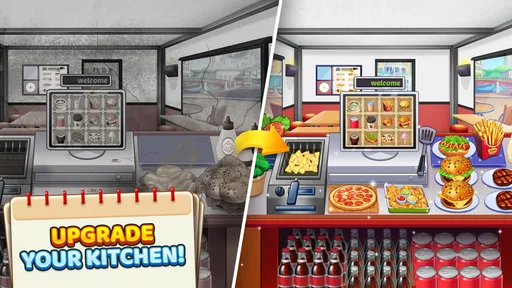
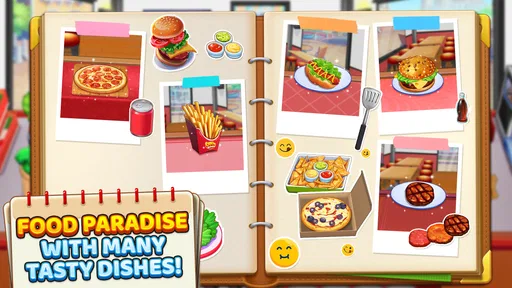



Our Review of Cooking Madness: A Chef's Game
 Analysis by Appyee
My first impression of Cooking Madness: A Chef's Game is that it understands the appeal of a busy kitchen: several small jobs compete for attention, and a satisfying run depends on spotting what needs doing next. It is an arcade game from ZenLife Games Ltd, built around quick decisions rather than realistic cooking technique. I find it best in short bursts, when I want something lively that makes me pay attention without asking me to learn a complicated control scheme.
First Impressions and Gameplay
The moment you dive into Cooking Madness, you're greeted by vibrant graphics and a lively soundtrack that instantly gets you into the cooking spirit. It’s like stepping into a virtual culinary wonderland where you’re the star chef.
The game is all about managing your time effectively while cooking up a storm. You’ll find yourself juggling multiple orders, frying up some juicy steaks, boiling pasta, and serving customers faster than you can say "Bon Appétit!" The controls are intuitive—just tap and swipe to prepare dishes and serve them to your hungry patrons. Easy peasy, right? Well, not quite. As you progress, the game throws more complex recipes and tighter time constraints your way. It’s challenging, but that’s what makes it so darn addictive.
That escalating pressure is also the main trade-off. If you like pausing to consider every move, the countdown can feel more like a demand than a challenge. I would not choose it for a relaxed, story-led evening game; it works better when I am ready to focus for a few minutes and accept that a rushed attempt may not go perfectly. Its appeal is the quick loop of reacting, serving, and trying again, not a deep simulation of running a real restaurant.
Levels and Challenges
If you’re a fan of progression, you’re in for a treat. Cooking Madness features a myriad of levels, each with its unique set of challenges and goals. You’ll travel through different restaurants, each themed with its own cuisine—from juicy burgers to exquisite sushi, there’s a little something for everyone.
Each level requires you to meet specific objectives, like serving a certain number of dishes or reaching a particular score within the time limit. The game does a fantastic job of keeping you on your toes with new ingredients and cooking techniques. And just when you think you’ve mastered a level, new challenges pop up, keeping the gameplay fresh and exciting.
For a more controlled attempt, I find it useful to treat the opening moments of a level as a setup phase rather than immediately tapping at everything. Notice which preparation tasks can be handled while a customer waits, then reserve attention for the steps that need a quick response. This small change makes the screen feel less chaotic and helps separate a genuine timing mistake from simple unfamiliarity with a new arrangement.
When a level proves stubborn, repeating it with one clear goal in mind is more useful than trying to play faster in every possible way. I might focus on avoiding missed orders first, then work on improving the pace once the sequence feels familiar. That approach suits the game’s short challenge format: progress comes from learning how a particular kitchen flows, not from pretending every level can be solved with the same frantic tapping.
Graphics and Soundtrack
Visually, the game is an absolute treat. The animations are smooth, and the bright, colorful graphics make every dish look mouth-wateringly delicious. The developers have done an excellent job in making the food look appetizing, and the characters are charmingly designed, each with quirky expressions that add a dash of personality to your virtual restaurant world.
As for the soundtrack, it’s upbeat and perfectly complements the fast-paced nature of the game. The background music and sound effects, like the sizzling of a pan or the ding of a timer, immerse you in the kitchen atmosphere. It’s those little details that make the experience all the more enjoyable.
The presentation does practical work as well as setting a mood: distinct food, animated customers, and kitchen sounds give each action a readable feel, so the busy screen has some personality instead of looking like a row of abstract buttons. I would still keep the audio at a level where a timer cue can be heard if I am relying on sound to stay aware of the pace. When I want to play quietly, the colorful motion remains enough to make the action legible, though the soundtrack is part of what gives a run its cheerful bustle.
That combination makes the game feel more playful than a plain score-chaser, but it does not turn the cooking into a slow, cozy activity. The cheerful look sits alongside a brisk rhythm, and that contrast is central to its character: the restaurant seems welcoming, while the orders keep pulling my attention in different directions. If I want calm atmosphere first and challenge second, I would reach for a gentler game; here, the mood is designed to make pressure fun.
Who Will Enjoy This Kitchen Rush
I would recommend it to players who enjoy touch-based arcade games, short goals, and visible improvement through repetition. It can fit a commute, a small break, or a quiet stretch at home: one level gives the session a clear beginning and end, and the quick input makes it easy to pick up without a long tutorial. A realistic use case is waiting for a friend at a café; I can play a round, put the phone away when they arrive, and return later without needing to remember a long story or complicated control layout.
It is less suitable for someone who wants a cooking game focused on recipes, ingredient discovery, or leisurely decoration. The kitchen theme is the setting for a reflex-and-priorities challenge, not a promise of culinary instruction. Players who dislike timers, repeated attempts, or the feeling that a small delay can affect a run may find the central loop tiring rather than exciting. In that case, a slower restaurant or cooking title with less emphasis on time pressure would be a better fit.
Compared with the usual arcade alternatives, the restaurant framing gives each burst of action a clear purpose: orders, preparation, and serving make the tapping feel like a chain of tasks rather than a score counter alone. The flip side is that the interface can become demanding as more steps compete for attention. I would pick a simpler reflex game for a few seconds of distraction, and a management simulation for long-term planning; this one sits between them, using quick service rounds and progression to make short sessions feel purposeful.
Playing Comfortably and Spending Wisely
Before starting a level, I would make sure I have enough uninterrupted attention to finish it. The game’s pace makes it a poor companion for moments when I need to keep checking messages or listen closely to someone nearby. If I am interrupted, it is more sensible to stop between rounds than to expect the kitchen to wait while I handle something else. This is a small but useful distinction: the game is easy to pick up, but an active attempt still asks for focus.
Cooking Madness is free to play, with in-app purchases ranging from $0.99 to $99.99 per item. That range makes it worth deciding in advance whether I am comfortable spending on optional game items. I would first see how far the ordinary progression takes me and whether the challenge itself remains enjoyable; buying something to get past a frustrating moment may not help if what I actually dislike is the timer pressure. Spending makes most sense for a player who already knows they enjoy the loop and wants to choose that convenience, rather than someone still deciding whether the game suits them.
I also would not assume that a purchase is necessary just because a later challenge takes more effort. The most useful first adjustment is usually to learn the sequence and reduce avoidable mistakes. If I find myself repeating a level, I would change one habit at a time—such as paying closer attention to the order of tasks—instead of immediately trying to buy a shortcut. That keeps the decision about spending tied to enjoyment, not impatience.
Fit, Access, and Long-Term Appeal
The game is rated Teen, so I would check that age guidance before handing it to a younger player. Its appeal is easy to understand even if someone has never played a restaurant game: the objective is visible, the controls are direct, and the challenge is expressed through serving customers under pressure. Still, the quick pace means it is not automatically the right choice for every casual player. Someone who enjoys bright presentation but wants a slower tempo may like the theme more than the actual play.
On Android, it requires version 6.0 or later. It has a 4.8 average from around 3.2 million ratings, and has passed 100 million installs, which suggests a very broad audience for this style of arcade cooking. Those figures are reassuring context, not a guarantee that its particular pace will click for me. The current version is 3.1.3, and the game was released on September 30, 2017; what matters in day-to-day use is whether the level-based rhythm still feels rewarding after the novelty of the setting wears off.
For me, the lasting appeal depends on treating each stage as a small timing puzzle rather than expecting a new kind of game every time. The restaurant and cuisine changes help give progression a sense of place, while the recurring need to prioritize keeps the basic loop recognizable. That consistency is a strength for someone who wants a familiar game to revisit, but it may feel repetitive to a player who needs major mechanical changes to stay interested.
Final Thoughts
Overall, Cooking Madness: A Chef's Game is a highly entertaining app that will keep you engaged with its dynamic gameplay and lively presentation. Whether you’re a casual gamer or someone who loves to strategize, this game offers something for every type of player.
If you’re ready to put your culinary skills to the test and manage a bustling kitchen, then give Cooking Madness a whirl. Who knows, you might just discover your inner chef along the way. So grab your virtual apron, and let’s get cooking!
My honest recommendation is to try it when you are in the mood for a lively, focused arcade session, not when you want a quiet kitchen fantasy. Its strongest quality is how the bright restaurant world and cheerful sounds make a demanding sequence of taps feel inviting; its clearest limitation is that the same time pressure can become repetitive or stressful. If that balance sounds appealing, it is an easy game to dip into. If you prefer calm creativity or detailed restaurant planning, another kind of cooking game will probably suit you better.
Privacy and Permissions
See what permissions an app requests and how it handles your data.
- Wi-Fi connection information
- view Wi-Fi connections
- Other
- view network connections, full network access, control vibration, prevent device from sleeping, Google Play license check
Verdict
Strengths of Cooking Madness: A Chef's Game
- Engaging gameplay keeps you hooked.
- Variety of recipes and cuisines.
- Smooth and responsive controls.
- Regular updates with new levels.
- Offline mode available for travel.
Limitations of Cooking Madness: A Chef's Game
- Can be repetitive over time.
- In-app purchases can be pricey.
- Some levels feel too challenging.
- Ads can interrupt gameplay.
- Battery drains quickly during play.
Other Releases by ZenLife Games Ltd
View All


Similar Picks in This Category
View All
Subway Surfers
SYBO Games4.6

Stickman Party 234 MiniGames
PlayMax Game Studio4.6

Subway Princess Runner
Ivy4.4

Temple Run
Imangi Studios4.2

Zombie Tsunami
Mobigame SAS4.6

Stack Ball - Crash Platforms
CASUAL AZUR GAMES4.5
Frequently Asked Questions
What is Cooking Madness: A Chef's Game about?
Cooking Madness: A Chef's Game is a fast-paced time management game where players step into the shoes of a chef. The goal is to efficiently prepare and serve dishes to customers across various restaurants. The game challenges players with diverse recipes, kitchen upgrades, and increasing difficulty levels to test their culinary skills.
Is Cooking Madness free to play, or does it have in-app purchases?
Cooking Madness is free to download and play; however, it includes in-app purchases. Players can buy items such as currency, boosters, or other premium content to enhance their gameplay experience or speed up progress. The game can be enjoyed without purchases, but spending may provide advantages.
What platforms is Cooking Madness available on?
Cooking Madness: A Chef's Game is available on both Android and iOS platforms. Players can download the game from the Google Play Store for Android devices or the Apple App Store for iOS devices. Ensure your device meets the necessary system requirements for optimal performance.
How does Cooking Madness: A Chef's Game handle difficulty progression?
The game increases in difficulty as players advance through levels. Each stage introduces more complex recipes, faster customer orders, and new kitchen challenges. To succeed, players must strategize their cooking sequences and manage time effectively, often requiring multiple attempts to master a level.
Does Cooking Madness require an internet connection to play?
Cooking Madness: A Chef's Game can be played offline, making it a convenient option for gaming on the go. However, some features, such as in-app purchases and certain updates, may require an internet connection. Playing offline ensures uninterrupted gameplay but limits access to some online features.
Play our best games!


